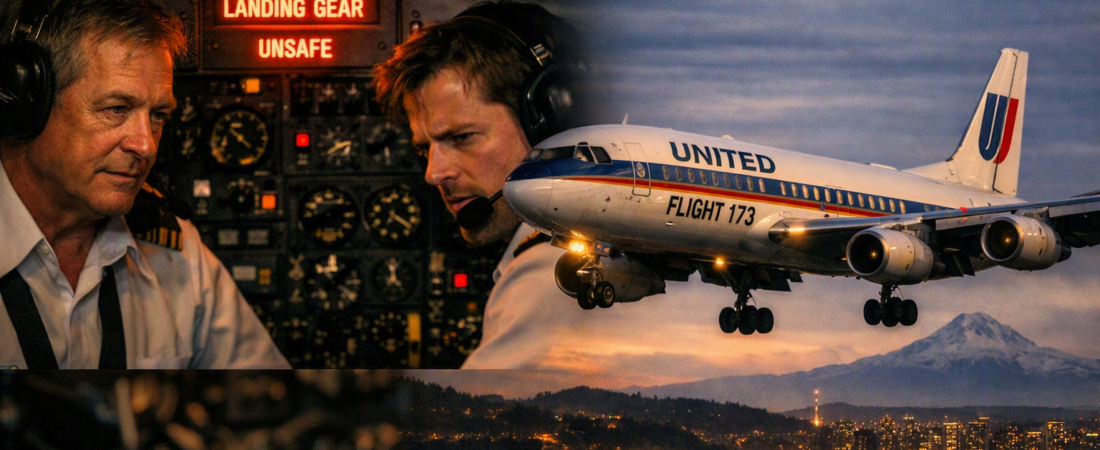
On December 28, 1978, United Airlines Flight 173 was approaching Portland, Oregon. The crew noticed a problem with the landing gear indicator — a small light that didn’t turn green. They circled the city for almost an hour, trying to fix it.
But in their focus on that tiny light, they missed something bigger: the fuel was running out.
When the engines failed, the plane crash‑landed in a wooded suburb. Ten people died — but 175 survived, thanks to the captain’s skill and calm under pressure. It was a tragedy born from a small mistake — a single light bulb — but it changed aviation forever.
Investigators found that the crew’s fixation on one minor issue caused them to overlook critical warnings. That insight led to the creation of Crew Resource Management (CRM) — a new system that trains pilots to communicate, share responsibility, and challenge decisions when something feels wrong.
Today, CRM is used by airlines, hospitals, nuclear plants, and even space missions. It’s credited with saving millions of lives worldwide.
A tiny mistake. A devastating impact. And from it, a revolution in safety.
Inspired by the real story of United Airlines Flight 173, Portland, 1978.