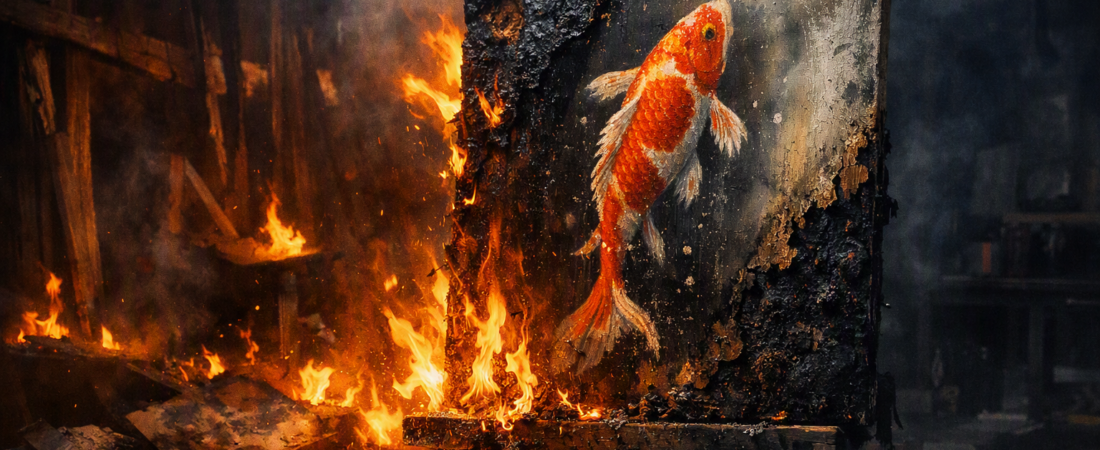
In the quiet streets of Kyoto, a man named Hiroshi Ono lived alone in a small wooden house. He was a failed artist — once promising, now forgotten. His canvases gathered dust, his brushes hardened with paint. He hadn’t created anything in years.
One winter night, Hiroshi decided to clean his studio. He stacked his old paintings — hundreds of them — and stared at them for hours. Each one reminded him of rejection letters, lost exhibitions, and the silence that followed his dreams.
In a moment of frustration, he lit a match.
He didn’t mean to burn them all. Just one. Just the one that hurt the most.
But the flame caught the corner of another canvas. Then another. Within minutes, the fire spread across the room.
He ran outside as the studio burned — his life’s work turning to ash.
Neighbors rushed to help. Firefighters arrived. The house was saved, but the studio was gone.
The next morning, Hiroshi stood in the snow, staring at the blackened remains. He felt hollow — until he noticed something strange.
In the ashes, one canvas had survived. Half‑burned, half‑intact. It showed a single red koi fish swimming upward through dark water.
He had painted it years ago, when he still believed in rebirth.
That image — that survivor — changed everything.
He took the half‑burned painting, framed it, and hung it in a local café. People stopped to look. They asked about it. They said it felt alive.
Within months, the café owner asked him to paint more. Then a gallery called. Then a newspaper wrote about “the artist who rose from the ashes.”
Hiroshi rebuilt his studio. He began painting again — but differently. Every new piece carried traces of fire, smoke, and rebirth. He called his collection “Ashes of Light.”
Today, his work hangs in museums across Japan. That single, accidental flame — that tiny mistake — became the spark that transformed his life.
A tiny spark. An enormous transformation.
Inspired by: A true story from Kyoto, Japan — 1995